
How UK Weather Affects Roof Lifespan (and How to Add Years, Not Headaches)
British weather doesn’t just change often — it wears roofs down from every direction. Sideways rain, unexpected heatwaves, gusty Atlantic storms, frost cycles and the occasional hail shower all push roofing materials to their limits. Over the years, these conditions interact with the natural weak points in any roof, whether that’s ageing mortar, older membranes, or areas where debris and moisture build up. The good news is that with the right products and a little awareness, your roof lifespan can be increased significantly.
At Country Roofing Supplies, we help trades and homeowners choose materials designed for real UK exposure, making roofs more resilient to the climate they face daily. Here’s how each type of weather influences roof lifespan — and why certain problems appear long before others.
Rain: The Everyday Culprit
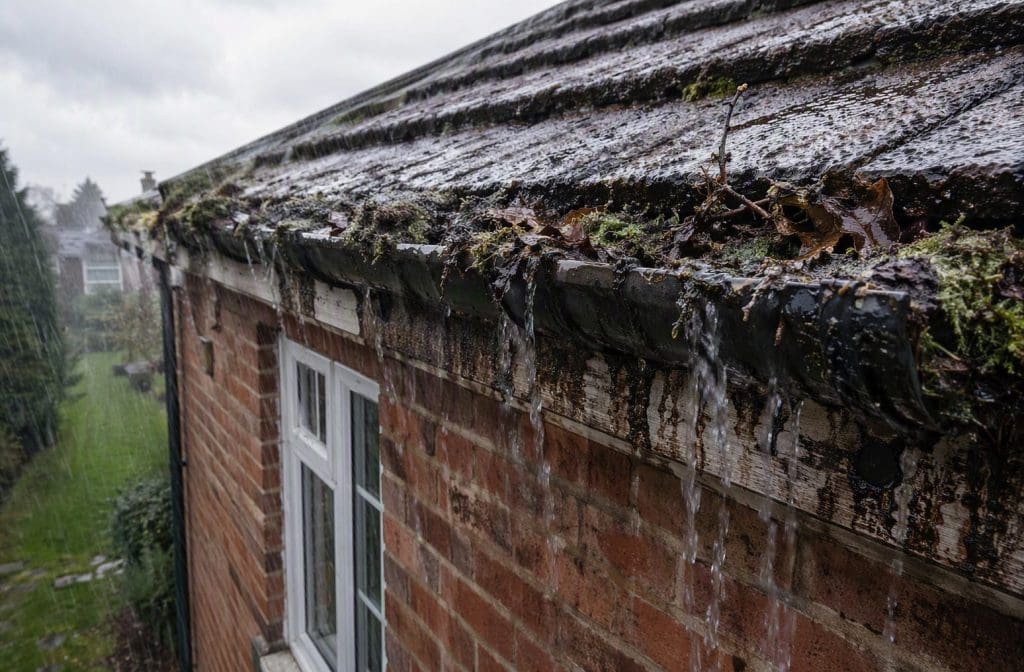
Persistent rainfall and high humidity are the UK’s most consistent stressors. Water naturally seeks out weaknesses such as perished flashings around chimneys or roof windows, sagging underlay at eaves, or valleys where debris forces water sideways instead of downwards. On shaded slopes, especially north‑facing ones, moss holds moisture against tiles for long periods, accelerating surface wear on older concrete tiles. Over time, this constant exposure leads to damp patches near abutments, gutters that overflow during showers, and tile surfaces that slowly deteriorate.
Wind & Storms: Uplift Finds the Weak Points
Modern storms rarely remove a roof entirely, but they don’t need to. Once wind gets under a slightly raised tile or a ridge cap with ageing mortar, uplift forces begin to travel along ridges and verges. Repeated gusts loosen mortar‑bedded details and can cause tiles or slates to shift out of position. These issues are often noticeable as wavy ridge lines, occasional rattling during high winds, or small amounts of debris appearing after stormy weather. Older roofs built before BS 5534 fixing standards tend to show these effects more quickly.
Freeze–Thaw Cycles: Tiny Cracks, Big Impact
Winter frost is one of the most quietly damaging factors affecting UK roofs. When moisture inside tiles or mortar freezes, it expands and widens any existing micro‑cracks. Repeated freeze–thaw cycles gradually create spalling, flaking edges, and crumbling mortar bedding. Older concrete tiles and weathered clay products are especially vulnerable, particularly in areas like valleys where debris slows drainage and allows water to linger. After several winters, tile surfaces begin to pit and mortar sheds as fine dust.
Sun, UV & Heatwaves: Not Just a Holiday Problem
Although the UK isn’t known for extreme heat, longer and hotter summers mean more UV exposure than many older roofs were designed for. Bituminous felts can become brittle, while thermal expansion stresses flashings, joints and underlays. On flat roofs, a combination of ponding water and heat accelerates ageing, leading to blistering, deformation and fine cracks around penetrations. These effects build slowly but are often the reason a seemingly sound flat roof begins ageing prematurely.
Snow, Ice & Hail: Infrequent but Expensive
Snow isn’t a weekly occurrence in most parts of the UK, but when heavy snow does arrive, it places significant load on shallow‑pitched roofs. Uneven melting inside the loft can cause ice dams at the eaves, forcing water back under tile laps or into imperfections in older membranes. Hailstorms can chip concrete tile edges or dent more malleable metal roofs, leaving small, easy‑to‑miss marks that become weak points during later wet weather. Even short cold snaps can leave long‑term marks on vulnerable materials.
Condensation & Loft Climate: The Hidden Internal Threat
Not all roof ageing comes from outside. Everyday household moisture from showers, cooking and laundry rises into the loft. Without proper airflow, this moisture condenses on timbers, fixings and underlays, leading to blackened nails, damp insulation, and dark patches on the underside of the felt during cold spells. These issues are often mistaken for leaks even though the source is internal climate imbalance. Consistent, unobstructed ventilation from eaves to ridge is one of the simplest and most overlooked factors influencing roof lifespan.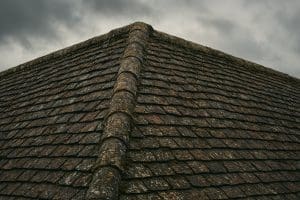
Typical Lifespan Ranges (Real‑World UK Conditions)
- Natural slate: 75–100+ years
- Clay tiles: 50–100 years
- Concrete tiles: 30–60 years
- Metal roofs (steel, aluminium, zinc): 40–70+ years
- Flat roofs (EPDM/GRP/modern bitumen): 20–30 years, depending on build‑up and detailing
Actual performance depends on product quality, installation standards, exposure and ongoing care.
How to Reduce Weather‑Related Roof Wear
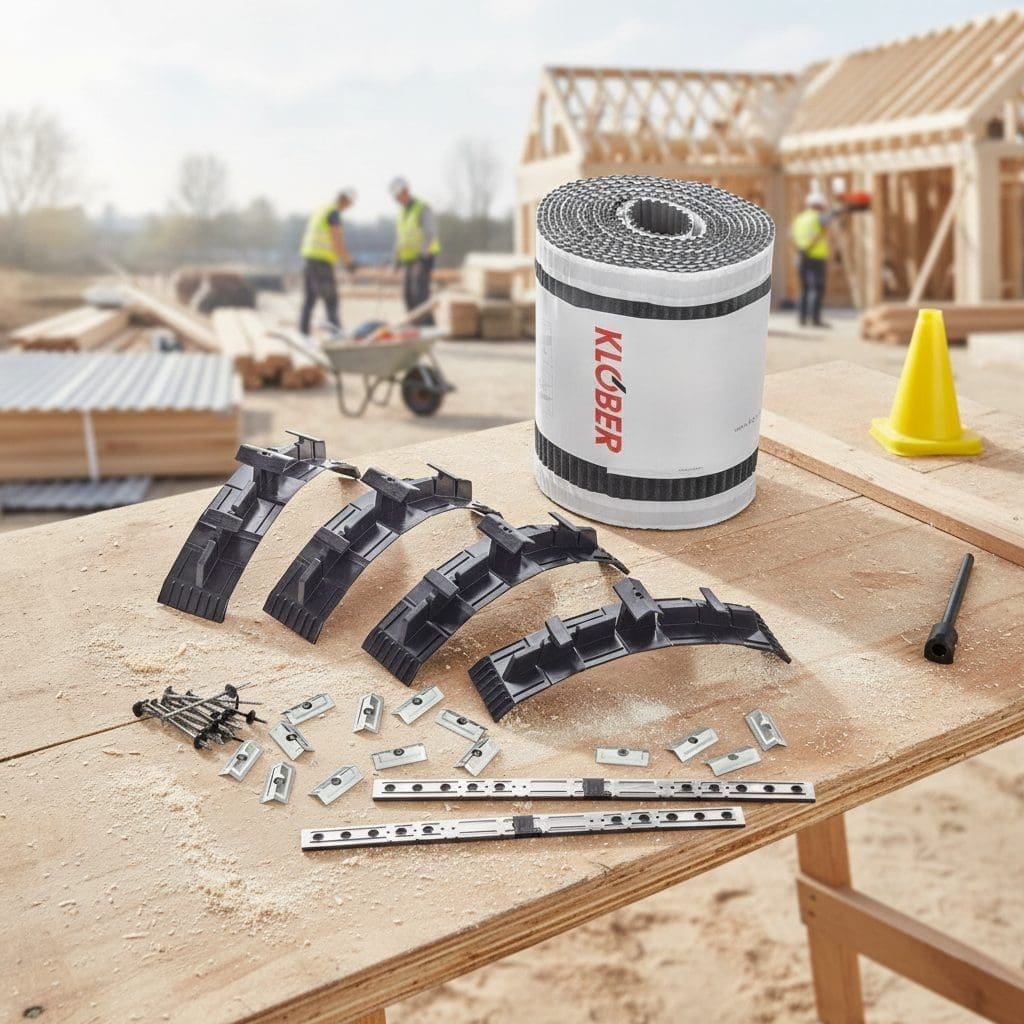
Although the UK climate exposes roofs to constant stresses, small preventative steps go a long way. Keeping gutters and valleys clear improves drainage during prolonged rain and prevents water from sitting where frost cycles can slowly cause damage. Using modern dry‑fix systems instead of mortar reduces storm‑related movement and removes the risk of mortar cracking in winter. Ensuring consistent loft insulation and good ridge‑to‑eaves ventilation minimises condensation and helps prevent ice‑dam formation. Selecting UV‑stable membranes and flexible flashings supports better performance during hot spells and thermal movement. Combined, these simple choices help materials last closer to their intended lifespan.
How Country Roofing Supplies Can Help
Choosing the right components for your roof type and exposure zone is one of the most reliable ways to maximise lifespan. At Country Roofing Supplies, we stock breathable membranes, eaves trays, ventilation systems, dry ridge and verge kits, exposure‑rated fixings, EPDM/GRP/bitumen flat‑roof systems, lead and lead alternatives, and roof‑safe moss treatments — all selected for the realities of UK weather.


)