The Different Types of Roofing Materials… and Why You Should Know Them
Unless you’re a roofing specialist, chances are you don’t spend a whole lot of time thinking about roofing materials. But if you’re a homeowner, it’s important to have at least a basic understanding of the different types of roofing materials that are available, as well as their pros and cons. After all, your roof is one of the most important components of your home, and you want to make sure it’s up to the task of protecting your home and your family from the elements.
So without further ado, let’s take a look at some of the most popular roofing materials on the market today:
Slate Roofs
Slate roofs have been around for centuries, and for good reason; they’re incredibly durable and long-lasting. A slate roof can easily last 100 years or more with proper maintenance, making it one of the longest-lasting roofing options on the market today; perfect for the ever-turbulent British weather! Slate is also eco-friendly; it can be recycled or reused when it eventually needs to be replaced.
The main downside to slate roofs is that they’re very expensive; in fact, they’re often two or three times as expensive as asphalt tile roofs or metal roofs. Slate roofs are also very heavy, which means your home’s structure will need to be able to support the weight before a slate roof can be installed.
Asphalt Tiles
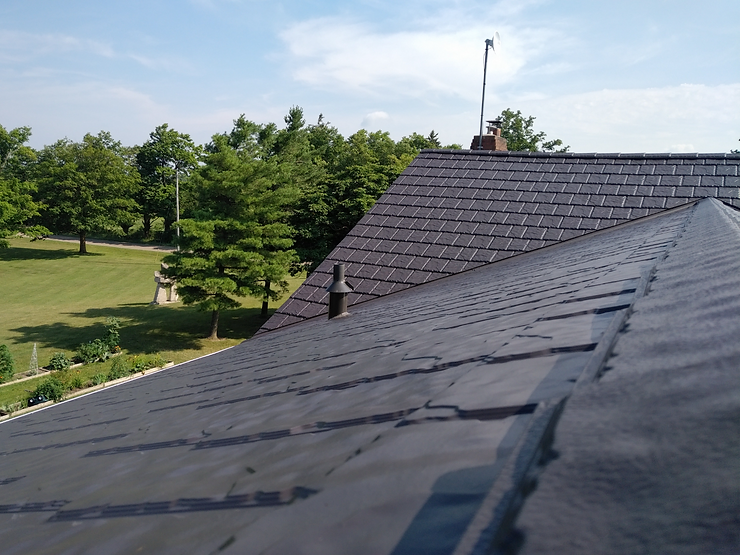
Asphalt tiles offer an interesting alternative to traditional roofing materials. They are one of the most popular roofing options in America. This popularity comes from their low cost, easy installation, and wide range of colours and styles. Asphalt tiles also have a strong durability record. With proper maintenance, an asphalt‑tiled roof can last 15 to 30 years.
The main downside is that asphalt tiles do not support eco‑friendly disposal. Once they reach the end of their lifespan, you usually cannot recycle or reuse them. Asphalt tiles also offer less durability than some other materials. In areas with high winds or severe weather, strong gusts can blow them off or damage them more easily.

Metal Roofs
Metal roofs are becoming more popular because they offer durability, eco‑friendliness, and energy efficiency. A well‑made metal roof can last 50 years or more with very little maintenance. Many metal roofing types can also be recycled or reused when eventually replaced. Metal roofs reflect heat away from your home, which helps reduce summer energy bills.
The main downside is that metal roofs usually cost more than asphalt tiles or similar materials. They also tend to be louder during rainstorms or hail impacts. If you prefer a quiet and peaceful home, a metal roof may not be the best choice.

Clay and Concrete Tiles
People have used clay tiles for centuries, and their durability has made them one of the most popular roofing materials in the UK. They can last up to 50 years with proper care, and they’re also great at insulating your home. However, they can be expensive, and they’re not particularly energy-efficient. Concrete tiles are a more recent invention, and they offer some advantages over clay tiles. They’re less expensive and easier to install, and they don’t require as much maintenance. However, they’re not as durable as clay tiles and they don’t insulate quite as well.

There is no right or wrong choice when selecting a roofing material for your home. The decision usually depends on your preference and budget. Country Roofing Supplies are always available to answer questions and help you choose the best materials. Hopefully, this article has improved your understanding of today’s most popular roofing materials. With this knowledge, you can make an informed decision that suits your home and your budget.
Tags: News